Discover The Ultimate Guide to Arepas Venezolanas-Flavorful, Easy & Gluten-Free
RECIPE BY
Chef Sophie Grace
8405 Views•18 min read
Venezuelan arepas are more than just a staple food; they’re a proud symbol of cultural heritage, a comfort meal, and a global culinary ambassador for Venezuela. Loved for their crispy exterior and soft, fluffy center, arepas venezolanas are versatile enough to be stuffed with almost anything, from meats and cheeses to veggies and spreads. Whether you’re already an aficionado or just discovering them, this article takes you deep into the heart of the Venezuelan arepa, from its origins and variations to nutrition, recipes, and expert tips.
Let’s explore everything that makes arepas venezolanas a must-try!
Table of Contents
What Are Arepas Venezolanas?
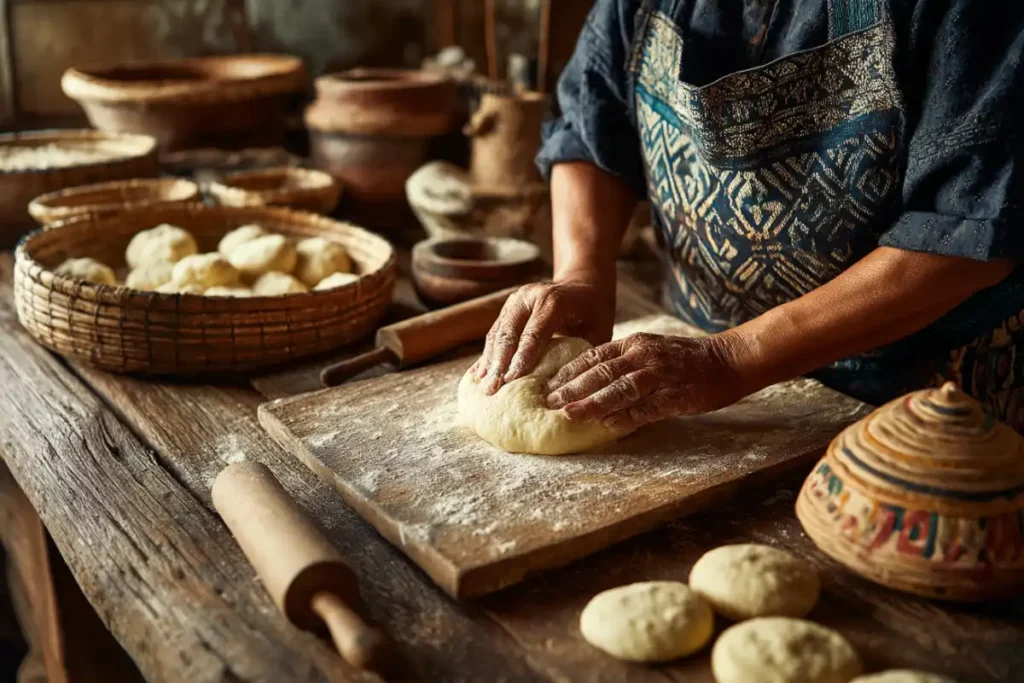
Crafting perfect arepa dough with Harina PAN
The Origins of Arepas in Venezuelan Culture
Arepas have been part of Venezuelan life for centuries, dating back to pre-Columbian times when indigenous tribes like the Timoto-Cuicas used ground maize to make circular flatbreads. These early arepas were made by hand and cooked over open flames. Fast forward to today, and they’re enjoyed daily across Venezuela, served for breakfast, lunch, or dinner.
The invention of precooked corn flour (Harina PAN) in the 1950s revolutionized arepa-making. It made preparation faster, more consistent, and widely accessible, even outside Venezuela. What’s incredible is that despite modernization, the cultural significance remains strong. Arepas are not just food; they represent a way of life.
In Venezuelan households, it’s common to hear, “¿Ya hiciste las arepas?”, which loosely translates to “Have you made the arepas yet?” It’s that central to the daily routine.
Why Arepas Are a Symbol of Venezuelan Identity
Arepas are so integral to Venezuelan life that they’re often called “el pan nuestro de cada día,” meaning our daily bread. Unlike typical bread, arepas are gluten-free, made only with cornmeal, water, and salt. That simplicity can be deceiving, though, because the fillings transform them into incredibly flavorful creations.
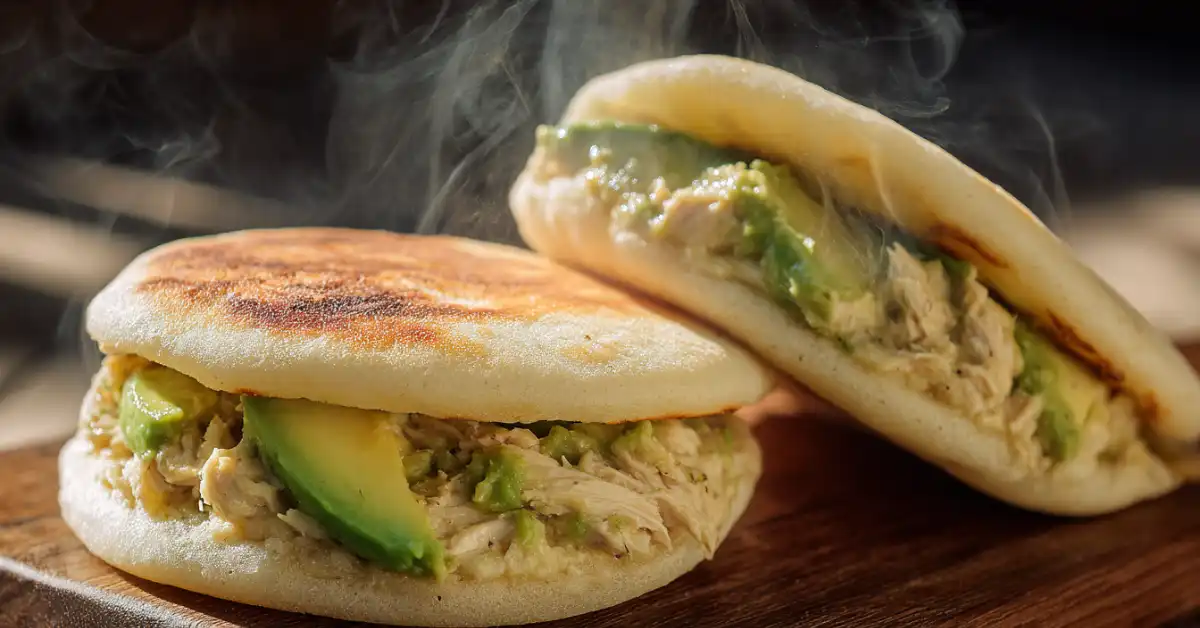
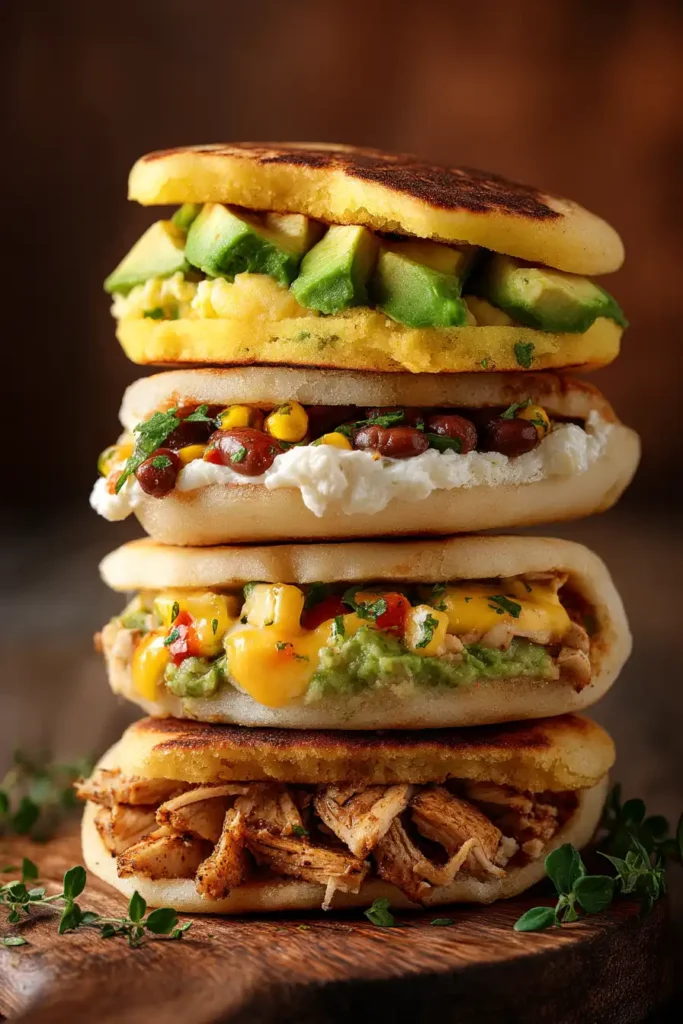
From Reina Pepiada (a creamy chicken and avocado mix) to Domino (black beans and white cheese), each filling reflects the diversity and creativity of Venezuelan cuisine. They’re served in restaurants, sold by street vendors, and made lovingly in home kitchens.
On the international stage, Venezuelan arepas have found a new audience thanks to the Venezuelan diaspora. In cities like Miami, Madrid, and Bogotá, areperas (arepa eateries) are booming.
Venezuelan arepas represent home, heritage, and heart, and they’re only growing more beloved around the world.
Key Differences Between Venezuelan and Colombian Arepas
Texture, Fillings, and Size Comparisons
While both Venezuelan and Colombian arepas trace their origins back to pre-Columbian indigenous peoples, the two have evolved into distinct culinary experiences. Venezuelan arepas are typically thicker and softer, with a fluffy interior that allows for generous fillings. They’re often grilled or baked after being pan-fried, giving them a slight crust with a pillowy center.
In contrast, Colombian arepas tend to be thinner and crispier. Many Colombian varieties, especially in regions like Antioquia, are eaten plain or with a light layer of cheese or butter on top, rather than being split open and stuffed.
The main game-changer? The filling. Venezuelans treat arepas almost like a sandwich, stuffing them with flavorful combinations such as:
Popular Venezuelan Fillings
Ingredients
Reina Pepiada
Chicken, avocado, mayo
Pelúa
Shredded beef, yellow cheese
Domino
Black beans, white cheese
Perico
Scrambled eggs with onions and tomatoes
Catira
Chicken, yellow cheese
Colombians, on the other hand, typically focus on simplicity. You might find:
Common Colombian Arepas
Style
Arepa de queso
Mixed with cheese
Arepa de choclo
Sweet corn and cheese
Arepa blanca
Plain with butter or salt
Both types are delicious in their own right, but the Venezuelan version tends to be more versatile in terms of stuffing and size.
Cultural and Culinary Distinctions Explained
In Venezuela, arepas are central to daily life and often replace traditional bread entirely. They’re seen at every meal, whether it’s breakfast, lunch, or dinner. Arepas also vary by region. For example, the arepa andina, made with wheat flour, comes from the Andes region, while the arepa de pabellón mimics Venezuela’s national dish with shredded beef, plantains, beans, and cheese.
Colombian arepas are often enjoyed during festivities or as snacks, and they vary dramatically by region. Some are grilled over open flames; others are deep-fried. But they’re less often used as a vehicle for hearty fillings like in Venezuela.
One key culinary note: Venezuelan arepas are almost always made with Harina PAN, a pre-cooked white or yellow cornmeal that creates the perfect soft-yet-sturdy base.
Whether you prefer the rich, stuffed profile of Venezuelan arepas or the crispy, minimalism of Colombian ones, both share deep cultural roots and unique flavors.
What Are Arepas Made Of?
Understanding Pre-Cooked Corn Flour (Harina PAN)
At the heart of arepas venezolanas lies one key ingredient: pre-cooked corn flour, famously known by the brand name Harina PAN. This isn’t your regular cornmeal. It’s a specially treated flour where the corn is cooked, dried, and ground, making it fast to hydrate and easy to knead into smooth dough.
Unlike untreated cornmeal (which requires soaking and cooking), Harina PAN mixes easily with water and salt, forming a pliable dough in just minutes. This convenience revolutionized arepa-making in the 1950s and remains a pantry essential in Venezuelan households.
There are two main types:
Type of Harina PAN
Description
White corn flour
Traditional, neutral flavor, soft texture
Yellow corn flour
Earthier flavor, slightly grittier texture
Today, you’ll also find organic, whole grain, and even cassava versions available. But for that classic arepas venezolanas taste and texture, the white version remains king.
Since corn is at the core of arepas, why not explore it in other mouthwatering forms? This Fried Corn Recipe showcases how sweet corn can be transformed into a simple yet flavorful dish, perfect as a snack or a side to your favorite arepa filling.
Traditional and Modern Ingredient Variations
Though the classic recipe only requires three ingredients: corn flour, water, and salt, modern takes often include additions that enhance texture or flavor.
Here’s a look at traditional vs modern variations:
Ingredient
Traditional Use
Modern Twist
Salt
Base seasoning
Sea salt or Himalayan salt
Water
Dough hydration
Warm water for softer dough
Corn flour (Harina PAN)
Essential base
Yellow, organic, or flavored
Oil or butter
For pan-frying
Avocado oil or coconut oil
Cheese or herbs
Not in dough
Mixed into dough for flavor
Some people even add a bit of milk or broth to the dough to increase richness. Others mix in grated cheese, chia seeds, or flaxseed for a nutritional boost. However, for authenticity, sticking to the original 3-ingredient base is the gold standard. When shaping the arepas, dough consistency is crucial; it should be moist but not sticky. Flatten it to about ½ inch thick, and you’re ready to cook!
How to Make Arepas Venezolanas Step by Step
Essential Tools and Ingredients
To make perfect arepas venezolanas, you don’t need fancy equipment, just quality ingredients and a few basic tools. Here’s your checklist:
Ingredients:
2 cups Harina PAN (pre-cooked white cornmeal)
2 ½ cups warm water
1 tsp salt
1 tbsp vegetable oil (for pan-frying)
Optional Add-ins:
½ cup shredded cheese (for cheesy dough)
A pinch of sugar (for a golden crust)
Tools:
Tool
Purpose
Mixing bowl
To knead the dough
Wooden spoon/spatula
To combine ingredients
Non-stick skillet or griddle
For cooking evenly
Towel or lid
To cover the dough while it rests
These tools are likely already in your kitchen, making arepas an accessible dish for beginners and pros alike.
Step-by-Step Instructions for Perfect Arepas
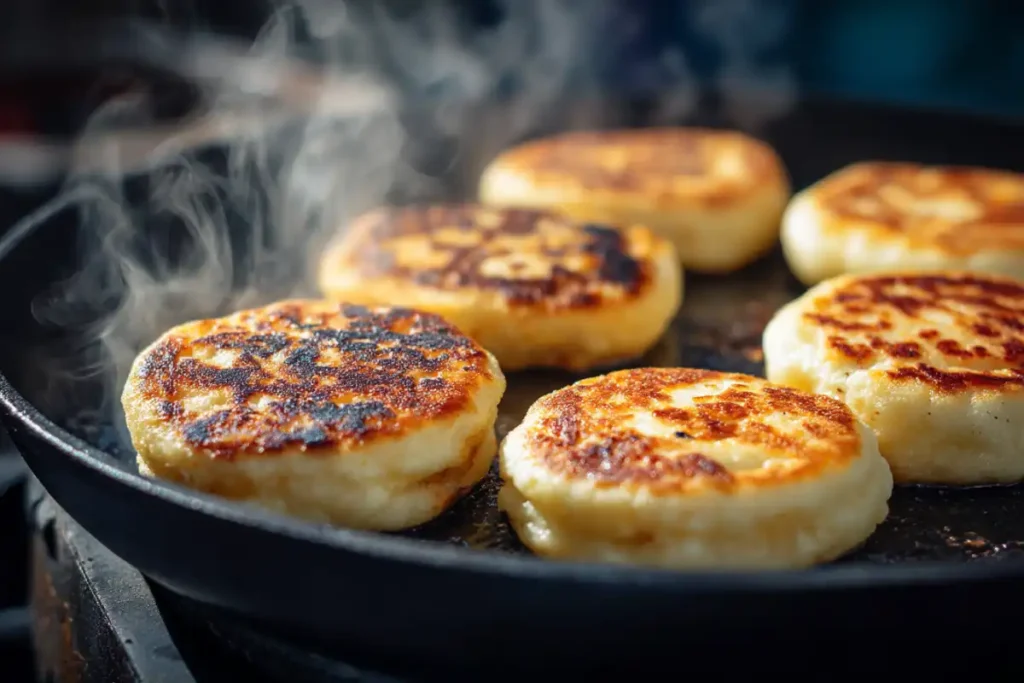
Grilling Venezuelan arepas to perfection
Now that your tools and ingredients are ready, here’s the foolproof process to make authentic arepas venezolanas at home:
Mix the Dough:
In a large bowl, combine warm water and salt.
Slowly add Harina PAN while stirring continuously to avoid lumps.
Once combined, knead gently with your hands for about 3 minutes.
Let It Rest:
Cover the dough with a clean towel and let it rest for 5–10 minutes. This helps hydrate the flour fully.
Shape the Arepas:
Divide the dough into 6–8 equal pieces.
Roll each into a ball, then flatten into discs about ½ inch thick.
Cook on Skillet:
Heat oil in a non-stick pan over medium heat.
Place arepas on the skillet and cook each side for 5–6 minutes until golden brown.
Optional Bake (for fluffier centers):
Transfer cooked arepas to a 350°F (175°C) oven for 10 more minutes. This ensures a soft, cooked-through center with a crisp crust.
Serve or Stuff:
Slice open and fill with your favorite ingredients like shredded beef, black beans, or avocado chicken salad.
Pro Tip: Tap an arepa with your finger, if it sounds hollow, it’s perfectly cooked!
Popular Fillings for Venezuelan Arepas
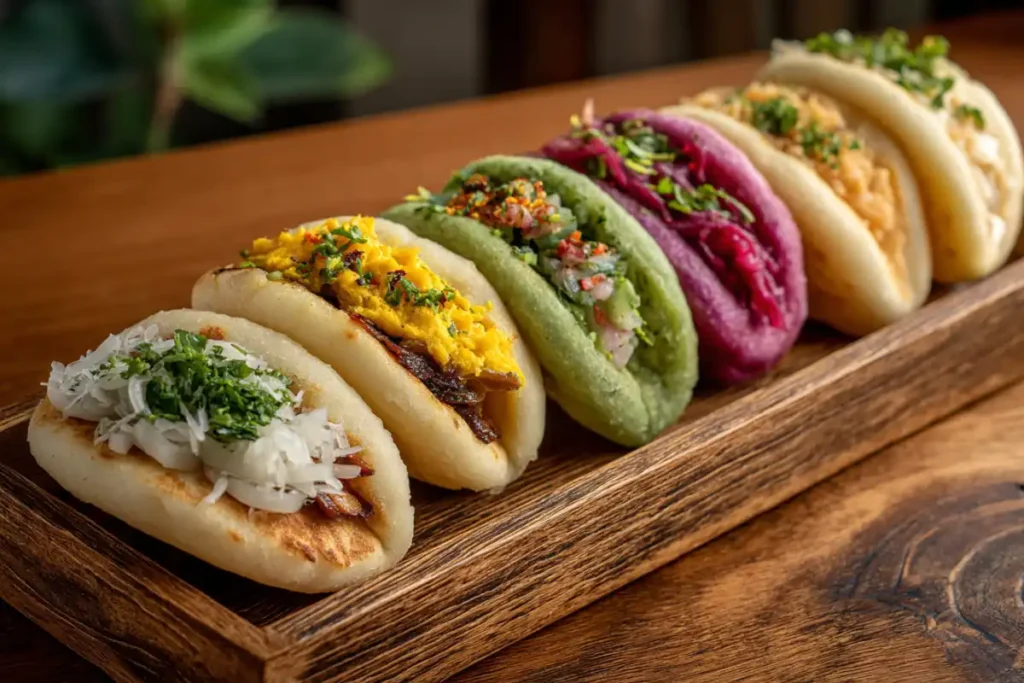
A showcase of Venezuela’s most popular arepa fillings
Classic Fillings Like Reina Pepiada and Perico
When it comes to arepas venezolanas, the fillings are where creativity shines. These traditional fillings are beloved across Venezuela and often reflect the country’s regional ingredients and bold flavors.
Here are five of the most iconic and widely enjoyed arepa fillings:
Filling Name
Ingredients
Notes
Reina Pepiada
Shredded chicken, avocado, mayo, lime, cilantro
Creamy, refreshing, and iconic
Perico
Scrambled eggs, tomato, onion, bell pepper
Common for breakfast
Pelúa
Shredded beef (carne mechada) with yellow cheese
Rich and savory
Domino
Black beans with salty white cheese
Protein-packed and vegetarian
Catira
Shredded chicken with cheddar or yellow cheese
Tangy and satisfying
These fillings represent a mix of protein, creaminess, and comfort, perfectly complementing the neutral taste of freshly made arepas. Each filling brings out a different personality of the arepa. From breakfast options like Perico to hearty dinners like Pelúa, the combinations are endless.
Looking to add a light and healthy side dish to your arepa meal? Consider pairing it with calabacitas a sautéed zucchini and corn medley. This Authentic Calabacitas Recipe brings the freshness of Mexican home cooking to your table and complements the savory heartiness of stuffed arepas perfectly.
Creative Modern Fillings to Try at Home
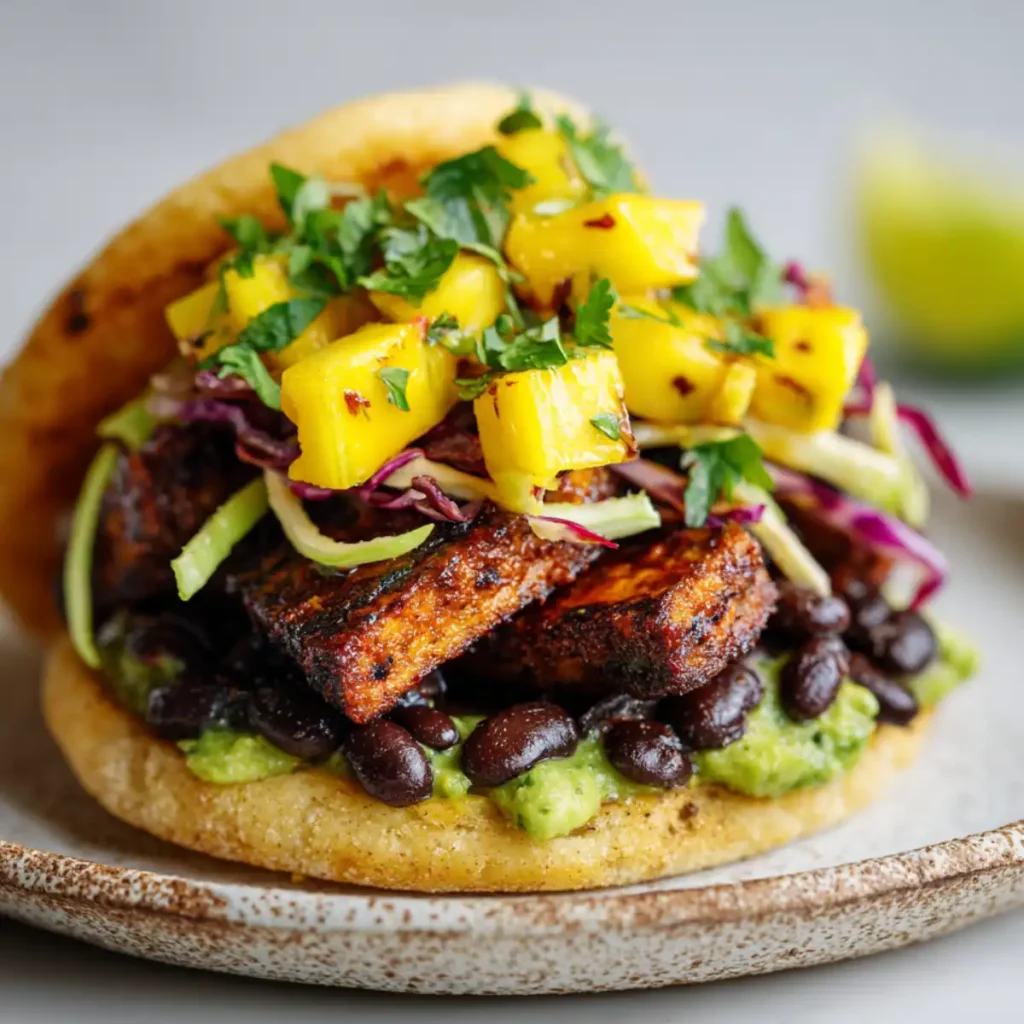
A fresh take – plant-based arepa packed with flavor
While traditional fillings have stood the test of time, today’s food lovers are adding modern spins to the classic arepas venezolanas. From vegan to gourmet, there’s something for everyone:
Modern Arepa Filling Ideas:
Avocado & Tempeh: Great for plant-based diets
Tuna Salad with Capers: Light and briny
Grilled Portobello & Mozzarella: Vegetarian twist with umami
BBQ Pulled Pork & Pickles: Southern U.S. fusion flavor
Mango Slaw & Spicy Chicken: Tropical and spicy balance
You can even create dessert arepas with fillings like banana and Nutella, or sweet cheese and guava paste.
Type
Fillings
Savory Gourmet
Brie & caramelized onions, truffle mushrooms
Vegan
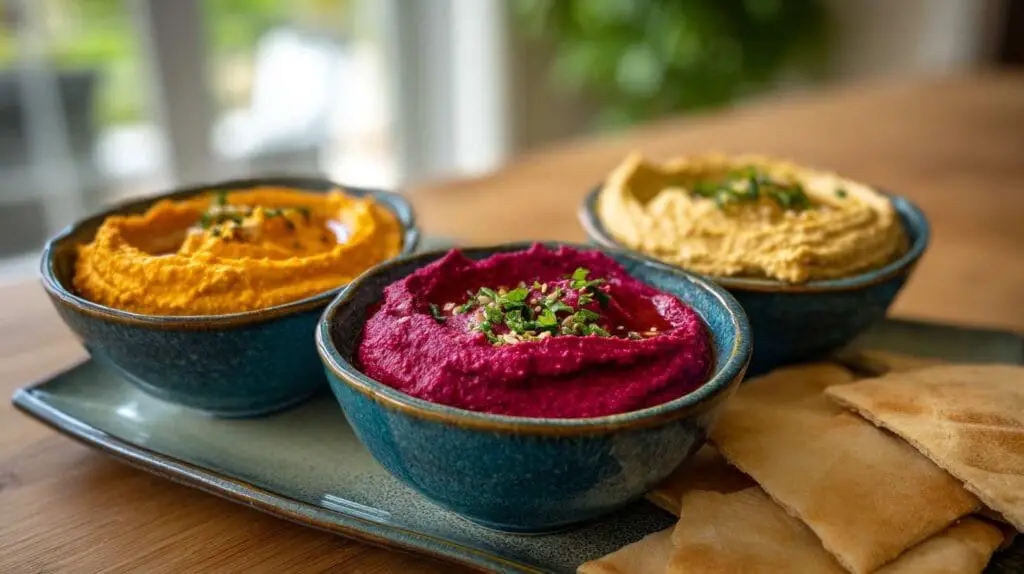
Hummus & grilled veggies, lentil stew
Sweet
Chocolate spread & strawberries, dulce de leche
The adaptability of arepas venezolanas makes them a favorite canvas for culinary expression around the world.
For a hearty vegan twist, black-eyed peas make an excellent protein-packed arepa filling. Try this Vegan Black-Eyed Peas Recipe that’s rich in flavor and perfect for plant-based eaters seeking bold, satisfying meals without meat or dairy.
Are Arepas Venezolanas Healthy?
Nutritional Value and Calories
At first glance, arepas venezolanas are incredibly simple: just corn flour, water, and salt. But don’t be fooled by their simplicity, they’re naturally gluten-free, rich in complex carbs, and a great base for balanced meals depending on the fillings.
Here’s a basic nutritional breakdown of one plain arepa (approx. 100g):
Nutrient
Amount
Calories
180–200 kcal
Carbohydrates
38 g
Protein
3–5 g
Fat
2 g (without fillings)
Fiber
3 g
Sodium
5–10 mg
If pan-fried with oil or loaded with cheese/meat, the calorie count will rise. However, you control what goes in it, making it easy to balance your macros.
Filling your arepa with lean proteins (like grilled chicken or black beans), healthy fats (like avocado), and veggies turns it into a complete and nutrient-dense meal.
For a quick health upgrade:
Bake instead of fry the arepas
Use whole grain or organic corn flour
Pair with fresh veggies or greens
Skip heavy sauces and processed cheese
Corn isn’t just versatile; it’s also packed with nutrients. It provides fiber, B vitamins, antioxidants, and sustained energy. According to Healthline’s corn nutrition guide, corn can support digestive health and blood sugar control when consumed in whole or minimally processed forms, just like in traditional arepas.
How to Make Healthier Arepas at Home
Making healthy arepas venezolanas at home starts with ingredient choices and cooking methods:
Tips for a Healthier Arepa:
Use minimal oil when pan-frying. opt for avocado or olive oil
Don’t overfill with heavy meats or fatty cheese
Include fiber by adding chia or flaxseed to the dough
Switch up the flour try cassava or whole grain cornmeal
Use Greek yogurt or hummus as creamy, protein-rich spreads
Also, make your arepas a part of a balanced plate: serve with a green salad or veggie soup to keep your meal both satisfying and light.
And if you’re meal prepping, arepas refrigerate and freeze well, making them a go-to for healthy lunches on the go.
Arepas vs. Bread: Which One Is Healthier?
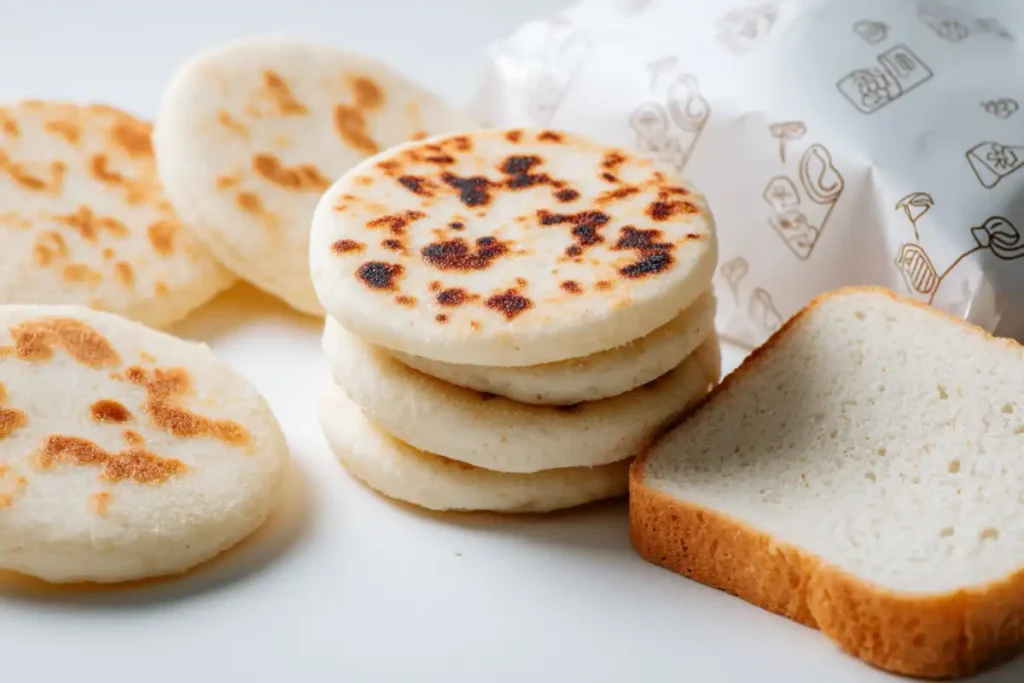
Why arepas win against bread for healthy eating
Comparing Nutrition and Digestion
When choosing between arepas venezolanas and bread, many people ask which is healthier. The answer? It depends on what you’re looking for, but in several ways, arepas have the upper hand, especially for gluten-free and whole-food diets.
Here’s a quick comparison:
Nutrient
Arepa (100g)
White Bread (100g)
Calories
~180–200 kcal
~265 kcal
Carbohydrates
~38g
~49g
Protein
~3–5g
~9g
Fat
~2g (no oil)
~3–4g
Fiber
~3g
~2g
Gluten
Gluten-Free
Contains Gluten
Arepas are made with only three ingredients: corn flour, salt, and water, making them a cleaner, minimally processed option compared to mass-produced breads that often contain additives, dough conditioners, and preservatives.
In terms of digestion, arepas are easier on the stomach, especially for people with gluten sensitivity or celiac disease. Plus, they’re slower to spike blood sugar levels, particularly if baked and paired with fiber-rich fillings.
Arepas for Gluten-Free Diets
One of the biggest reasons people choose arepas venezolanas over bread is their natural gluten-free nature. Unlike many gluten-free breads that use fillers or gums to mimic elasticity, arepas don’t require anything extra.
This makes them ideal for:
Gluten-free eaters
People on elimination diets
Those avoiding yeast or refined flours
Kids with food allergies or picky preferences
And because they’re made from corn, arepas are also rich in B vitamins, magnesium, and antioxidants found in whole grain maize.
Want more energy in your meals? Fill your arepa with beans, avocado, or grilled veggies, and you’ve got a high-fiber, energizing, and delicious meal.
Troubleshooting Common Arepa Problems
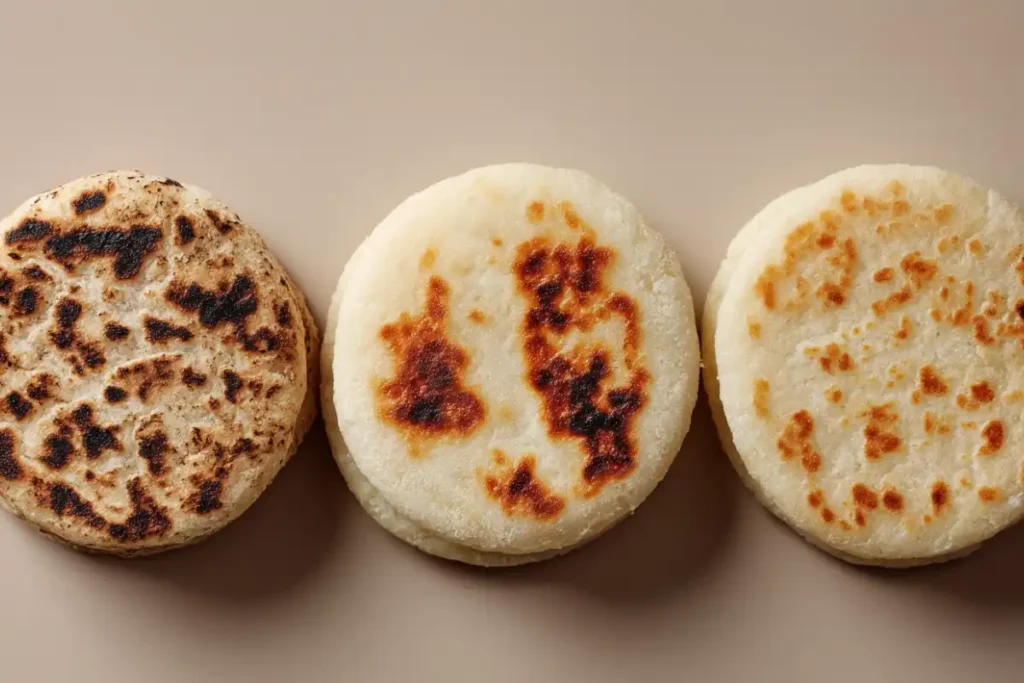
Avoid these arepa-making pitfalls with these pro tips
Why Are Your Arepas Not Fluffy or Fully Cooked?
One of the most frequent frustrations when making arepas venezolanas is ending up with dense, raw centers or flat discs that refuse to puff. But don’t worry, getting the right texture is easier once you understand a few key tricks.
Let’s break down the usual culprits:
Problem
Likely Cause
Quick Fix
Dense interior
Dough too dry or under-kneaded
Add more water and knead longer
Crackling during cooking
Overworked or dry dough
Let dough rest, add a bit of oil
Not fluffy / flat arepas
Dough too thin or cold griddle
Use ½-inch thickness, preheat pan
Raw inside
Undercooked or heat too high
Finish in oven at 350°F for 10 min
Sticky dough
Too much water or hot liquid
Use warm (not hot) water, add more flour
Pro Tip: The dough should feel like soft playdough, not sticky, not dry. Pressing with your thumb shouldn’t leave any crumbs.
Also, ensure that your griddle or pan is hot but not smoking. A medium heat gives the outside a golden crust while allowing the center to cook through slowly.
How to Get the Right Texture Every Time
For beautifully fluffy arepas venezolanas every time, follow these consistency and cooking guidelines:
1. Hydrate properly: Use the ratio of 1 cup flour to 1¼ cups water as a rule of thumb. Adjust slightly based on humidity.
2. Rest the dough: Letting it sit for 5–10 minutes allows the flour to absorb water evenly.
3. Thickness matters: Flatten each arepa to ½ inch thick. thinner ones tend to get crispy but dry; thicker ones may stay raw inside if not finished in the oven.
4. Use two-step cooking: Pan-fry to form a crust, then bake to cook the center. This combo creates that iconic crispy-outside, soft-inside bite.
5. Don’t rush: High heat = burnt outside, raw inside. Cook on medium for 5–6 minutes per side, then transfer to the oven for 10 minutes.
Still having trouble? Try shaping your arepas a bit smaller. Sometimes a size tweak makes all the difference!
Arepas Venezolanas in the Global Food Scene
Venezuelan Arepas Around the World
In recent years, arepas venezolanas have moved far beyond their home kitchens and street carts. Thanks to the Venezuelan diaspora, arepas have gained popularity in major cities across the Americas and Europe, becoming a symbol of comfort and cultural pride.
You can now find areperas (arepa restaurants) in cities like:
Miami, FL – Known as the unofficial capital of Venezuelan expats
Madrid, Spain – Where arepas are served alongside tapas
Toronto, Canada – Home to food trucks offering fusion arepas
Bogotá, Colombia – Where the Venezuelan variety is enjoyed alongside local versions
These global adaptations keep the spirit of arepas venezolanas alive while embracing local flavors. Some eateries even combine arepas with international ingredients like pesto chicken, Thai beef, or Mediterranean veggies.
What’s helping arepas go mainstream? Their versatility, customizability, and gluten-free nature make them a hit with modern eaters, including vegetarians, vegans, and those on clean-eating plans.
If you’re excited about how arepas have crossed borders and taken on new life in different kitchens, you’ll also love exploring another Latin American favorite: birria tacos. Our Ultimate Birria Tacos Recipe Guide walks you through the rich, spiced beef and juicy, taco-dipping experience that’s taking food trucks and home kitchens by storm.
Where to Find or Order Authentic Arepas
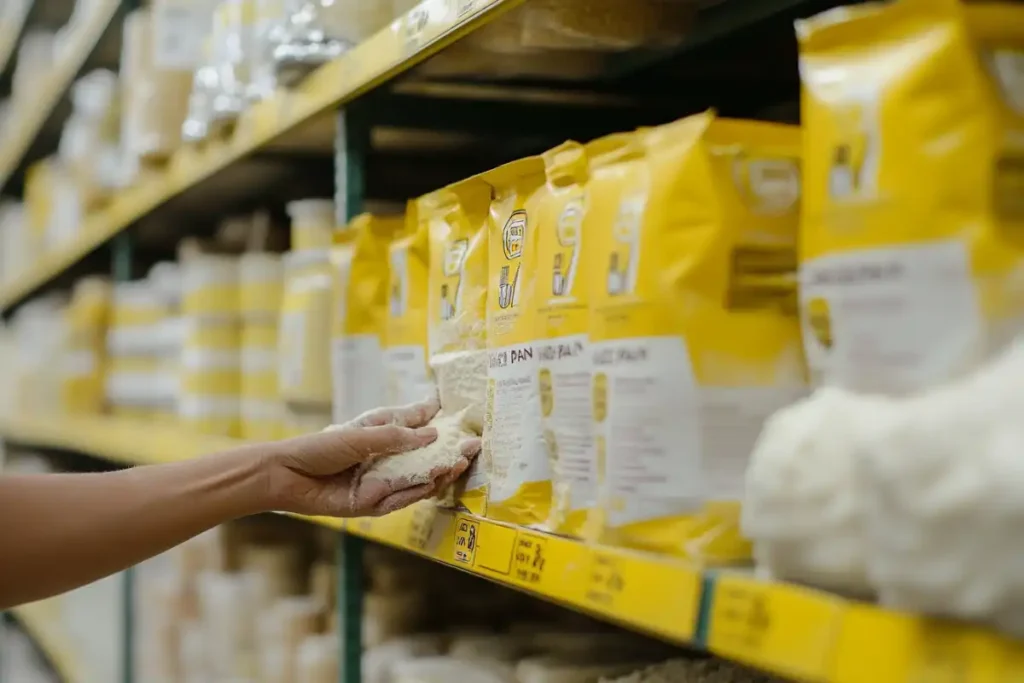
Stock up on Harina PAN – the soul of arepas venezolanas
Want to try authentic arepas venezolanas but not ready to make them from scratch? No problem! Here’s where to look:
Option
Where to Find
Latin Grocery Stores
Harina PAN and frozen arepas
Food Trucks
Often found in urban areas and college towns
Areperas
Especially in cities with Venezuelan communities
Delivery Apps
UberEats, DoorDash, and Grubhub in select cities
International Markets
Europe, Asia, and Latin America
And if you’re the DIY type, many online stores now carry Harina PAN and authentic fillings like Venezuelan cheese or black beans, so you can recreate the flavor at home.
Whether you’re traveling or ordering in, arepas venezolanas have become a delicious ambassador of culture, identity, and innovation worldwide.
Frequently Asked Questions About Arepas Venezolanas
What makes Venezuelan arepas different?
Venezuelan arepas are known for being thicker, softer, and stuffed with a variety of fillings, unlike Colombian arepas which are often thinner and served plain or with cheese. The focus in Venezuela is on versatility and creativity, turning arepas into hearty, standalone meals.
What is arepas made of?
Traditional arepas venezolanas are made of just three ingredients: pre-cooked corn flour (Harina PAN), water, and salt. No yeast, no gluten, and no preservatives. just wholesome simplicity.
Are Venezuelan arepas healthy?
Yes, especially when baked and filled with nutritious ingredients like beans, avocado, lean proteins, or veggies. They’re naturally gluten-free, low in fat, and made from whole cornmeal, making them a healthy alternative to processed bread.
What are the ingredients for Venezuelan arepas?
To make authentic arepas, you’ll need: 2 cups Harina PAN (white or yellow corn flour) 2 ½ cups warm water 1 tsp salt A bit of oil (for cooking) Optional add-ins include cheese, herbs, or seeds for extra flavor and nutrition.
Are arepas healthier than bread?
In many ways, yes. Arepas are less processed, naturally gluten-free, and have fewer additives than store-bought bread. You also control the ingredients, making it easier to tailor them to specific diets or nutrition plans.
Why are my arepas not fluffy?
The most common reasons are dough that’s too dry, griddles that are too cold, or not allowing enough resting time before cooking. Be sure to let the dough hydrate and cook on medium heat, then finish in the oven if needed.
Is arepa a junk food?
Not at all, unless it’s deep-fried and loaded with heavy, fatty fillings. At its core, an arepa is a simple, nutritious base. When combined with balanced ingredients, it becomes a healthy, wholesome meal.
Arepas venezolanas aren’t just food; they’re culture, history, and community served hot off a griddle. Whether you’re enjoying a classic Reina Pepiada or experimenting with modern vegan fillings, the beauty of the arepa lies in its adaptability and simple, honest ingredients. With just a few steps, you can bring this iconic Venezuelan dish into your kitchen and onto your table.
A colorful stack of Venezuelan arepas showcasing classic fillings such as avocado, black beans, cheese, and seasoned chickenPrint
Crispy & Fluffy Arepas Venezolanas – Traditional Venezuelan Corn Patties
Soft on the inside and golden on the outside, these traditional Venezuelan arepas are easy to make, naturally gluten-free, and perfect for stuffing with your favorite savory fillings.
Ingredients
Scale
2 cupsHarina PAN (pre-cooked white cornmeal)
2½ cupswarm water
1 tspsalt
1 tbspvegetable oil (for pan-frying)
Optional Add-ins:
½ cup shredded cheese
Chia seeds or flaxseeds for fiber
Herbs or spices (e.g., cumin, oregano)
Instructions
Step 1: Prepare the Dough In a large bowl, mix warm water and salt. Gradually stir in Harina PAN. Knead gently for 2–3 minutes until smooth and lump-free.
Step 2: Rest the Dough Cover and let the dough rest for 5–10 minutes to fully hydrate.
Step 3: Shape Arepas Divide dough into 6–8 balls and flatten into discs about ½ inch thick.
Step 4: Cook on Skillet Heat a non-stick skillet over medium. Add oil and cook arepas 5–6 minutes on each side until golden brown.
Optional Step 5: Bake For fluffier arepas, transfer to a 350°F (175°C) oven for 10 more minutes.
Step 6: Serve or Stuff Slice and fill with your favorite ingredients like avocado, chicken salad, beans, or cheese.
Notes
🧠 Pro Tips
Use warm, not hot, water for best dough texture.
If arepas crack while shaping, add a splash more water.
Tap for doneness—fluffy arepas sound hollow when cooked through.
Stuff with traditional fillings like Reina Pepiada or Domino for an authentic experience
💡 Storage
Store cooked arepas in the fridge for up to 3 days
I share easy, flavorful recipes that make home cooking simple, fun, and totally satisfying. Let's get in the kitchen and create something delicious together!








What do you think?
Share your thoughts, tips, or variations on this recipe!